


Lessons
Human Beings Live by Stories: Holocaust Memory through Memorials
State standards
Sorry, it seems there are no state standards for the given selections.
Length: 60-120 minutes | Grades: 6-12 | Themes: memory; memorials; the Holocaust
Lesson Overview
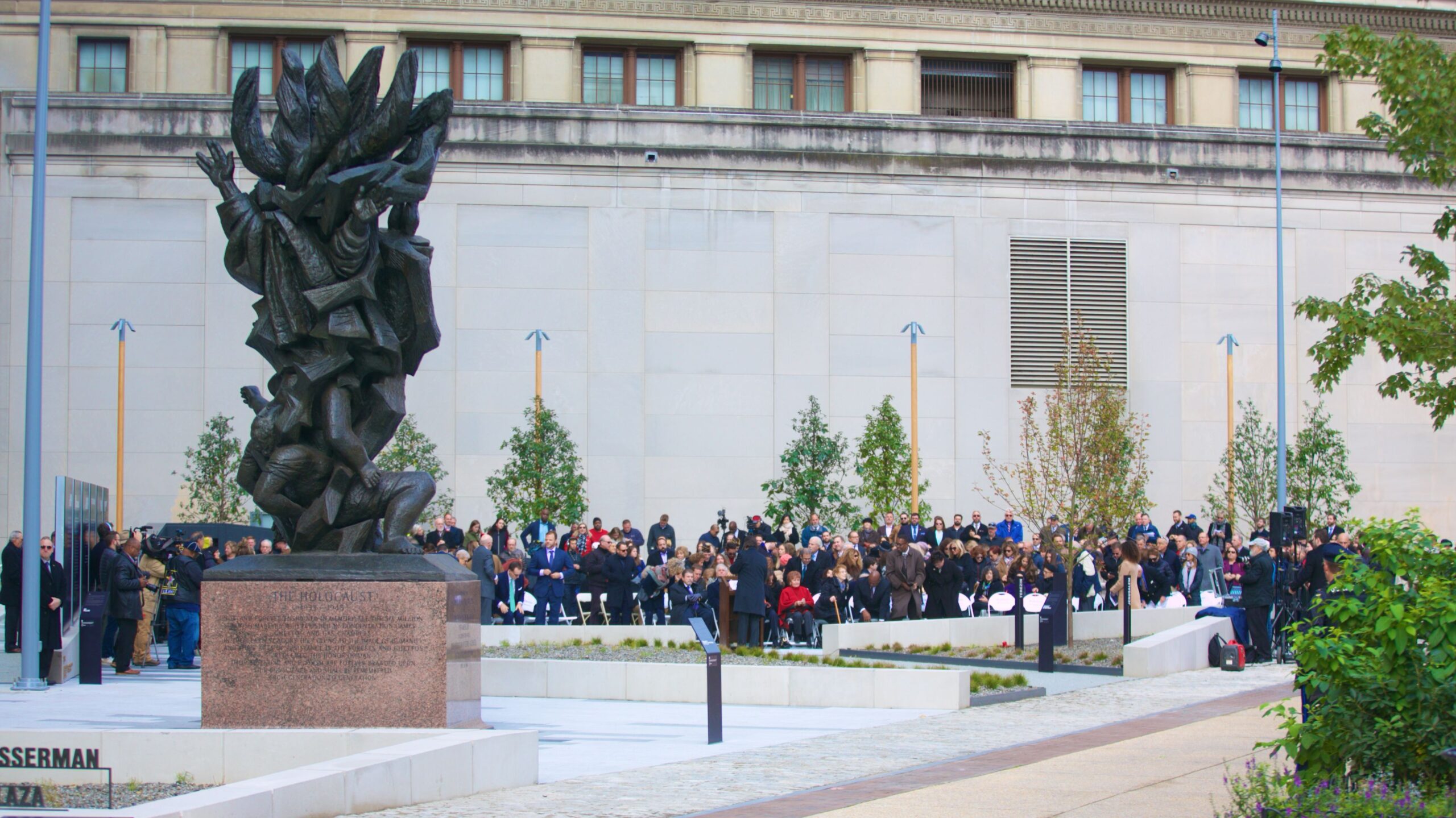
In recent decades, the Holocaust has become embedded within the shared memories of global humanity. In the United States, remembering the Holocaust has taken many shapes, from the publication of fiction and nonfiction, Broadway plays, film and television portrayals, the proliferation of museums, and educational mandates to teach this history across the country. Remembering the Holocaust and provoking powerful emotional connections through the stories told about the mass persecution and murder of Europe’s Jews has become a fixture in the arts, education, and media. Memorials are highly visible forms of memory that punctuate physical landscapes and serve as concrete forms of storytelling. Learning to “read” a memorial is a way to access the power of Holocaust memory.
In this lesson, students will learn about the way the Holocaust has been remembered, with a particular emphasis on the role played by memorials in telling different stories and evoking a range of emotional responses. Students will begin by reflecting on personal stories before engaging in comparative thinking about Holocaust memorials, using a framework to structure and assist their critical thinking and discussions. As an extension, students engage in project based learning to create a memorial they believe deserves to exist.
Enduring Understandings
The Holocaust has been remembered through a range of genres and media, including memorials.
Holocaust memorials tell stories and evoke emotions in order to educate American society while encouraging the pursuit of truth and justice.
Essential Questions
What is the purpose of memorials?
How has the Holocaust been remembered through memorials around the world?
Learning Objectives
Students will be able to critically “read” Holocaust memorials as “texts” by understanding the role of location, story, perspective, emotion, and symbol in memorialization.
Students will be able to discuss and articulate their understanding of people, places, and events from the past that deserve to be remembered through memorials in the pursuit of truth and justice.
Toolkit
-
Human Beings Live by Stories lesson plan
-
Human Beings Live by Stories slide deck
-
Human Beings Live by Stories handout
-
Making Memorials handout